Media Summary: In this lecture, we will learn about creating input output pairs required Don't miss out! Get FREE access to my Skool community — packed with resources, tools, and support to help you with Learn how to design great software in 7 steps:

Unit 4 4 Defining Efficient Data Loaders Part 3 Coding - Detailed Analysis & Overview

In this lecture, we will learn about creating input output pairs required Don't miss out! Get FREE access to my Skool community — packed with resources, tools, and support to help you with Learn how to design great software in 7 steps: New Tutorial series about Deep Learning with PyTorch! ⭐ Check out Tabnine, the FREE AI-powered This video presents an overview and animation of how the Pytorch Datasets and Ever wonder how companies train models with billions of parameters without running out of GPU memory? In this video, we ...

In this video, we explore different ways to iterate over a Pandas DataFrame and compare their performance using benchmarks.

Photo Gallery

Unit 4.4 | Defining Efficient Data Loaders | Part 3 | Coding
Unit 4.4 | Defining Efficient Data Loaders | Part 1 | Avoiding Data Loading Bottlenecks
Lecture 9: Creating Input-Target data pairs using Python DataLoader
Unit 4.4 | Defining Efficient Data Loaders | Part 2 | Datasets and Dataloaders
Master PyTorch Dataset & DataLoader |Secret to Efficient Data Pipeline in Pytorch | Pytorch in 2025
Efficient Data Handling in PyTorch: A Deep Dive into Datasets & Dataloaders
NEVER Worry About Data Science Projects Configs Again
PyTorch Tutorial 09 - Dataset and DataLoader - Batch Training
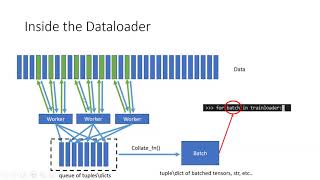
Algorithm Researcher explains how Pytorch Datasets and DataLoaders work
Correcting Unbalanced Data with 4 Different Approaches
How to Train Billion-Parameter Models: DeepSpeed ZeRO vs. PyTorch FSDP
From 32 Seconds to 0.3s: The Right Way to Iterate Pandas DataFrames
Sponsored
View Detailed Profile
Unit 4.4 | Defining Efficient Data Loaders | Part 3 | Coding

Unit 4.4 | Defining Efficient Data Loaders | Part 3 | Coding

Follow along with

Unit 4.4 | Defining Efficient Data Loaders | Part 1 | Avoiding Data Loading Bottlenecks

Unit 4.4 | Defining Efficient Data Loaders | Part 1 | Avoiding Data Loading Bottlenecks

Follow along with

Lecture 9: Creating Input-Target data pairs using Python DataLoader

Lecture 9: Creating Input-Target data pairs using Python DataLoader

In this lecture, we will learn about creating input output pairs required

Unit 4.4 | Defining Efficient Data Loaders | Part 2 | Datasets and Dataloaders

Unit 4.4 | Defining Efficient Data Loaders | Part 2 | Datasets and Dataloaders

Follow along with

Master PyTorch Dataset & DataLoader |Secret to Efficient Data Pipeline in Pytorch | Pytorch in 2025

Master PyTorch Dataset & DataLoader |Secret to Efficient Data Pipeline in Pytorch | Pytorch in 2025

Feeding your model the right

Sponsored
Efficient Data Handling in PyTorch: A Deep Dive into Datasets & Dataloaders

Efficient Data Handling in PyTorch: A Deep Dive into Datasets & Dataloaders

Don't miss out! Get FREE access to my Skool community — packed with resources, tools, and support to help you with

NEVER Worry About Data Science Projects Configs Again

NEVER Worry About Data Science Projects Configs Again

Learn how to design great software in 7 steps: https://arjan.

PyTorch Tutorial 09 - Dataset and DataLoader - Batch Training

PyTorch Tutorial 09 - Dataset and DataLoader - Batch Training

New Tutorial series about Deep Learning with PyTorch! ⭐ Check out Tabnine, the FREE AI-powered

Algorithm Researcher explains how Pytorch Datasets and DataLoaders work

Algorithm Researcher explains how Pytorch Datasets and DataLoaders work

This video presents an overview and animation of how the Pytorch Datasets and

Correcting Unbalanced Data with 4 Different Approaches

Correcting Unbalanced Data with 4 Different Approaches

This video covers

How to Train Billion-Parameter Models: DeepSpeed ZeRO vs. PyTorch FSDP

How to Train Billion-Parameter Models: DeepSpeed ZeRO vs. PyTorch FSDP

Ever wonder how companies train models with billions of parameters without running out of GPU memory? In this video, we ...

From 32 Seconds to 0.3s: The Right Way to Iterate Pandas DataFrames

From 32 Seconds to 0.3s: The Right Way to Iterate Pandas DataFrames

In this video, we explore different ways to iterate over a Pandas DataFrame and compare their performance using benchmarks.

3.4 DataLoader Sample

3.4 DataLoader Sample

Code for