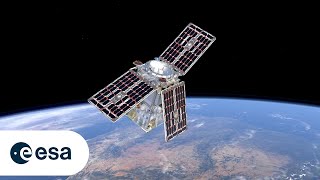
Media Summary: Orbiting Earth 180 degrees apart, the two The Glory spacecraft uses Orbital Sciences Corporation Space Systems Group's LEOStar-1 bus design, with deployable, ... Learn more about our partnership with Startical, a joint venture by Enaire, the fourth-largest national air navigation service ...

Hydrognss Deploys Solar Panels - Detailed Analysis & Overview

Orbiting Earth 180 degrees apart, the two The Glory spacecraft uses Orbital Sciences Corporation Space Systems Group's LEOStar-1 bus design, with deployable, ... Learn more about our partnership with Startical, a joint venture by Enaire, the fourth-largest national air navigation service ... Orbiting Earth 180 degrees apart, the two-satellite What if you could generate clean fuel directly on your rooftop? Just one of these incredible We were able to test its pattern with the satellite's

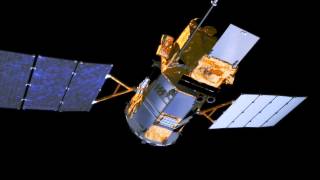
Photo Gallery

HydroGNSS deploys solar panels
Glory Solar Array Deployment
Satellite Solar Panel Deployment | Slow Motion
HydroGNSS uses GNSS reflectometry to ‘scout’ for water
HydroGNSS: an ESA Scout mission
How This Hydrogel Gives Us 12% More Solar Efficiency
HydroGNSS all-round view
HydroGNSS coverage
HydroGNSS launch highlights
This Solar Panel Creates Hydrogen from Sunlight!
HydroGNSS small but mighty
HydroGNSS-1 Satellite on Test
Sponsored
View Detailed Profile
HydroGNSS deploys solar panels

HydroGNSS deploys solar panels

Orbiting Earth 180 degrees apart, the two

Glory Solar Array Deployment

Glory Solar Array Deployment

The Glory spacecraft uses Orbital Sciences Corporation Space Systems Group's LEOStar-1 bus design, with deployable, ...

Satellite Solar Panel Deployment | Slow Motion

Satellite Solar Panel Deployment | Slow Motion

Learn more about our partnership with Startical, a joint venture by Enaire, the fourth-largest national air navigation service ...

HydroGNSS uses GNSS reflectometry to ‘scout’ for water

HydroGNSS uses GNSS reflectometry to ‘scout’ for water

The European Space Agency's two

HydroGNSS: an ESA Scout mission

HydroGNSS: an ESA Scout mission

Orbiting Earth 180 degrees apart, the two-satellite

Sponsored
How This Hydrogel Gives Us 12% More Solar Efficiency

How This Hydrogel Gives Us 12% More Solar Efficiency

How Hydrogel Can Double

HydroGNSS all-round view

HydroGNSS all-round view

Orbiting Earth 180 degrees apart, the two-satellite

HydroGNSS coverage

HydroGNSS coverage

Orbiting Earth 180 degrees apart, the two

HydroGNSS launch highlights

HydroGNSS launch highlights

ESA's first Scout mission,

This Solar Panel Creates Hydrogen from Sunlight!

This Solar Panel Creates Hydrogen from Sunlight!

What if you could generate clean fuel directly on your rooftop? Just one of these incredible

HydroGNSS small but mighty

HydroGNSS small but mighty

Orbiting Earth 180 degrees apart, the two-satellite

HydroGNSS-1 Satellite on Test

HydroGNSS-1 Satellite on Test

We were able to test its pattern with the satellite's

How the Next Big Solar Panel Tech is Already Here

How the Next Big Solar Panel Tech is Already Here

How the Next Big