Media Summary: This video explains the difference between the Learn more and apply to Jane Street's WiSE program in New York, London or Hong Kong: ... Binary: Plusses & Minuses (Why We Use Two's Complement):

Flip Flops Latches Memory Details Computerphile - Detailed Analysis & Overview

This video explains the difference between the Learn more and apply to Jane Street's WiSE program in New York, London or Hong Kong: ... Binary: Plusses & Minuses (Why We Use Two's Complement): You can't beat physics. Why the chip manufacturers are heading for a wall. We asked nano-scientist Phil Moriarty Professor of ... Relatively speedy-to-access cache saves your computer having to trudge over to the Long division can be arduous - division in general is something that even computer processors try to avoid with a simple ...

Derek McAuley is professor of Digital Economy at University of Nottingham's School of Computer Science. Main "Security of Data ... Floppy disk drives make sweet music, well, tuneful noises anyway. You might have seen them on YouTube before, but how do ...

Photo Gallery

Flip Flops, Latches & Memory Details - Computerphile
How Computer Memory Works - Computerphile
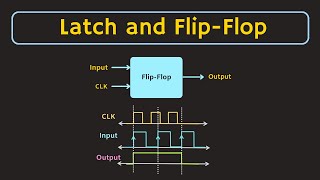
Latch and Flip-Flop Explained | Difference between the Latch and Flip-Flop
Magnetic Media (Floppies and Tapes) - Computerphile
Why Multi-Threaded Code Can Sometimes Misbehave (Weak Memory Concurrency) - Computerphile
Addressing Memory (Pt1) - Computerphile
Physics of Computer Chips - Computerphile
How Flip Flops Work - The Learning Circuit
How CPU Memory & Caches Work - Computerphile
The "Trick" that Compilers Use for Long Division - Computerphile
EXTRA BITS - Data Security and Flash Memory - Computerphile
Difference between Latch and Flip Flop
Sponsored
View Detailed Profile
Flip Flops, Latches & Memory Details - Computerphile

Flip Flops, Latches & Memory Details - Computerphile

Audible free book: http://www.audible.com/

How Computer Memory Works - Computerphile

How Computer Memory Works - Computerphile

How do logic gates store

Latch and Flip-Flop Explained | Difference between the Latch and Flip-Flop

Latch and Flip-Flop Explained | Difference between the Latch and Flip-Flop

This video explains the difference between the

Magnetic Media (Floppies and Tapes) - Computerphile

Magnetic Media (Floppies and Tapes) - Computerphile

Before flash

Why Multi-Threaded Code Can Sometimes Misbehave (Weak Memory Concurrency) - Computerphile

Why Multi-Threaded Code Can Sometimes Misbehave (Weak Memory Concurrency) - Computerphile

Learn more and apply to Jane Street's WiSE program in New York, London or Hong Kong: ...

Sponsored
Addressing Memory (Pt1) - Computerphile

Addressing Memory (Pt1) - Computerphile

Binary: Plusses & Minuses (Why We Use Two's Complement): http://youtu.be/lKTsv6iVxV4

Physics of Computer Chips - Computerphile

Physics of Computer Chips - Computerphile

You can't beat physics. Why the chip manufacturers are heading for a wall. We asked nano-scientist Phil Moriarty Professor of ...

How Flip Flops Work - The Learning Circuit

How Flip Flops Work - The Learning Circuit

Updated! Derek has this overview of

How CPU Memory & Caches Work - Computerphile

How CPU Memory & Caches Work - Computerphile

Relatively speedy-to-access cache saves your computer having to trudge over to the

The "Trick" that Compilers Use for Long Division - Computerphile

The "Trick" that Compilers Use for Long Division - Computerphile

Long division can be arduous - division in general is something that even computer processors try to avoid with a simple ...

EXTRA BITS - Data Security and Flash Memory - Computerphile

EXTRA BITS - Data Security and Flash Memory - Computerphile

Derek McAuley is professor of Digital Economy at University of Nottingham's School of Computer Science. Main "Security of Data ...

Difference between Latch and Flip Flop

Difference between Latch and Flip Flop

Digital Electronics: Difference between

Musical Floppy Drives - Computerphile

Musical Floppy Drives - Computerphile

Floppy disk drives make sweet music, well, tuneful noises anyway. You might have seen them on YouTube before, but how do ...